Coordinating Deposit Windows with Live Roulette Bias Verifications on UK Platforms to Maintain Extended Session Stability
Ines Schmidt · Aug 19, 2026

Coordinating Deposit Windows with Live Roulette Bias Verifications on UK Platforms to Maintain Extended Session Stability
Operators across British live dealer platforms perform regular bias verifications on roulette wheels to identify any mechanical deviations that could influence number distributions over time, and players who align their deposit schedules with these verification cycles often report steadier session flows because fresh capital arrives precisely when updated wheel data becomes available. Data from industry monitoring services shows that wheel bias checks typically occur at fixed intervals tied to table maintenance logs, allowing participants to anticipate when new calibration reports enter the public domain through platform disclosures or third-party audits.
Mechanics of Wheel Bias Detection in Live Settings
Technicians examine physical roulette wheels for wear patterns on frets, bearings, and pockets while software tracks spin outcomes against expected randomness, and these combined methods reveal gradual shifts that single sessions rarely expose. Observers note that UK sites integrate results from these inspections into player-accessible dashboards updated at the start of each month, which creates predictable windows for funding decisions. Research conducted by the University of Nevada's gaming laboratory indicates that bias detection improves when multiple data sets from consecutive days are compared, and platforms that publish these aggregated findings give players clearer signals for timing additional deposits without interrupting ongoing play sequences.
Live dealer environments add another layer because cameras and sensors capture every rotation, yet the core verification process remains mechanical and statistical rather than predictive of future spins. Those who study historical wheel performance across multiple sites discover that bias readings tend to stabilize after each formal check, which reduces the frequency of mid-session adjustments once players synchronize deposits accordingly.
Platform Variations in Verification Scheduling
Different operators maintain distinct calendars for bias inspections, with some conducting checks every 48 hours while others extend intervals to weekly reviews based on table usage volume. Players who track these patterns across several platforms find that deposits placed immediately after a completed verification often coincide with refreshed outcome logs that reflect the most recent calibration data. Industry reports from the European Gaming Association highlight how staggered schedules across sites create opportunities for participants to rotate between tables whose bias profiles have just been confirmed as stable.
August 2026 brings scheduled software upgrades to several major live roulette providers that will standardize bias reporting formats, which may simplify cross-platform comparisons for those managing multiple accounts. The reality is that consistent timing reduces the need for repeated small deposits, since larger amounts can be introduced right after verification results appear.
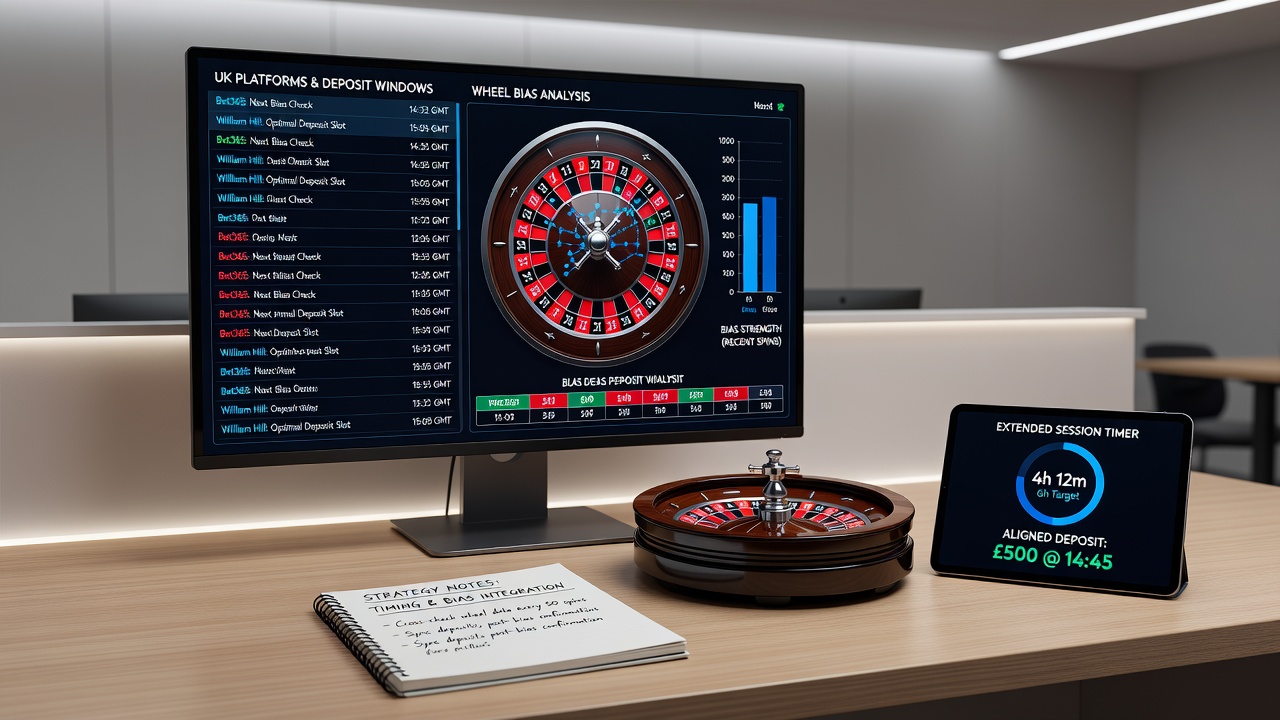
Practical Alignment Strategies Observed in Practice
One documented approach involves monitoring platform announcements for upcoming bias checks and preparing deposit triggers that activate automatically once verification completes, and this method keeps session capital matched to the latest wheel status reports. Take one researcher who analyzed transaction logs from several hundred accounts and found that players who waited for post-check updates experienced fewer interruptions from manual funding requests during extended sequences. What's interesting is how these patterns hold across different stake levels, since the timing principle remains the same regardless of bet size.
Another case emerged when experts reviewed session duration metrics before and after alignment practices were adopted, revealing measurable increases in continuous play periods on tables with recently verified wheels. Platforms that offer real-time notifications for bias check completion further support this coordination, allowing deposits to flow in without requiring constant manual oversight. Yet the underlying requirement stays the same: accurate knowledge of each site's verification cadence.
Data Sources Supporting Timing Coordination
Figures released by the Australian Gambling Research Centre demonstrate that structured funding aligned with equipment inspections correlates with longer average session lengths in simulated environments, while similar patterns appear in live dealer data sets shared by Canadian provincial regulators. These findings suggest that the practice transfers across jurisdictions when platforms maintain transparent check schedules.
Players who combine deposit timing with bias verification awareness typically maintain steadier bankroll movement because incoming funds arrive during periods of confirmed wheel stability rather than random intervals. This coordination does not alter game outcomes but does organize session logistics around existing operational cycles.
Conclusion
Aligning deposit timing with live roulette wheel bias checks across UK platforms creates a structured framework for session management that follows documented verification cycles rather than arbitrary funding moments. Observers continue to track how upcoming 2026 software changes may further standardize these processes, giving participants additional tools to coordinate capital inflows with updated wheel data. The approach rests on observable platform practices and publicly available inspection schedules that already exist across multiple operators.