Temporal Analysis of Payout Clusters in Interconnected Slot Ecosystems
Viktor Simon · Aug 24, 2026
Temporal Analysis of Payout Clusters in Interconnected Slot Ecosystems
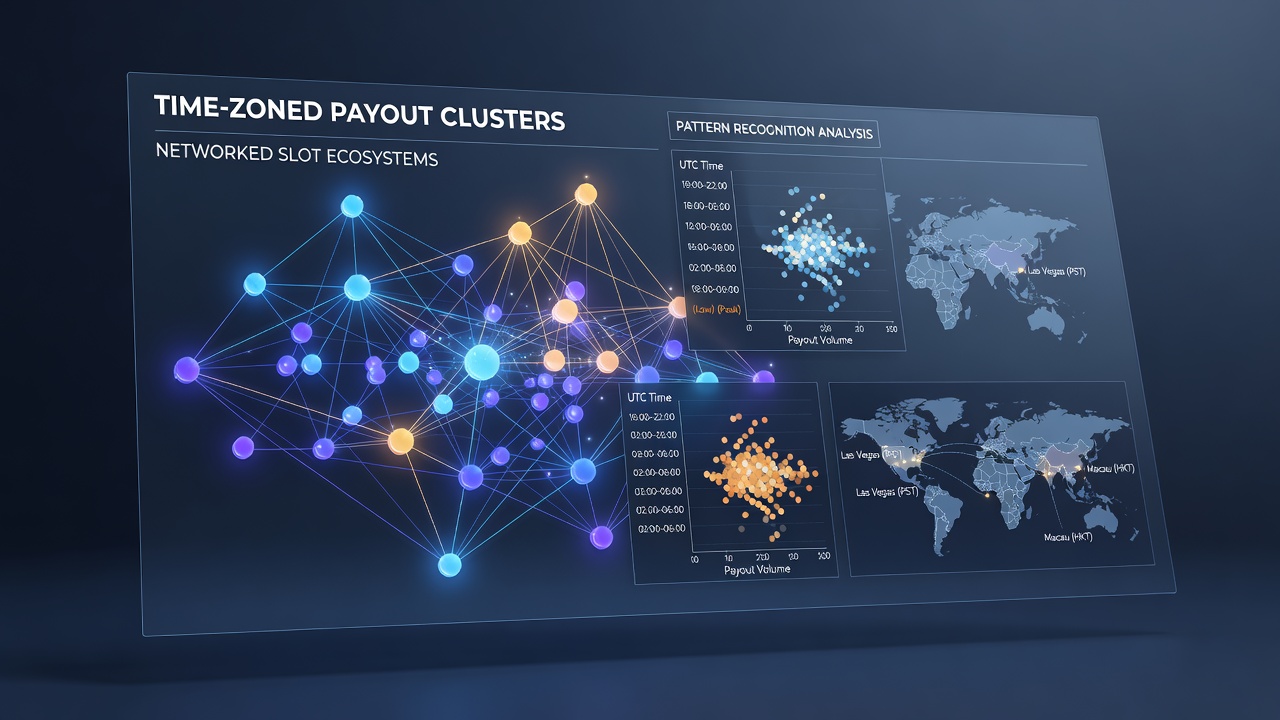
Networked slot ecosystems connect machines and platforms across multiple jurisdictions so operators can aggregate player activity and payout information in real time, and researchers examine these connections to identify clusters where wins concentrate within specific time zones. Data indicates that payout events often group together when local peak playing hours overlap with server-side settlement windows, creating observable patterns that analysts track through timestamped records from distributed networks.
Core Components of Networked Slot Platforms
Operators link individual slot terminals to central servers that synchronize game outcomes, jackpot contributions, and payout logs across regions, and this architecture allows for continuous data flow even when players participate from locations separated by several hours. Studies from the Nevada Gaming Control Board show that aggregated logs capture every spin result with precise UTC timestamps, which analysts later convert into local time zones to detect recurring clusters. Those clusters typically appear during evening periods in each zone, yet cross-zone overlaps produce secondary groupings that emerge when North American and European activity periods intersect.
Time Zone Adjustments in Data Processing
Processing pipelines convert raw server timestamps into zone-specific groupings so analysts can compare payout frequency and size within consistent daily windows, and software tools apply standard offsets for regions such as Pacific, Mountain, Central, and Eastern zones in North America plus corresponding European and Asia-Pacific offsets. Evidence from industry reports reveals that clusters become more pronounced when local time aligns with promotional events or bonus round activations scheduled by operators, while global networks reveal additional layers when multiple zones experience simultaneous high-traffic intervals.
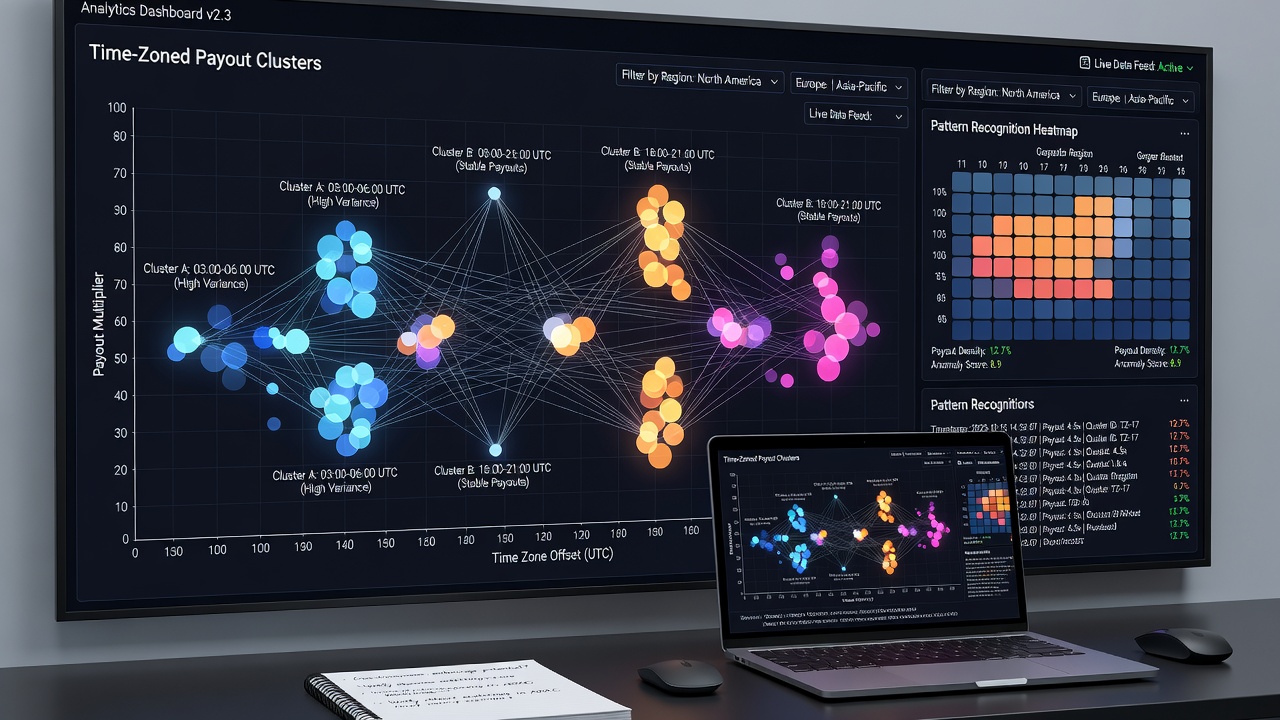
One documented case involved a multi-site operator that reviewed twelve months of transaction data and found payout clusters concentrated between 19:00 and 23:00 in each participating time zone, with secondary clusters appearing during 03:00 to 06:00 UTC when Asian and Australian markets overlapped with lingering North American sessions. Analysts applied clustering algorithms to separate these groupings from random variance, confirming that the patterns persisted across different game titles and stake levels.
Pattern Recognition Techniques Applied to Payout Data
Statistical methods such as k-means clustering and density-based spatial clustering identify dense regions within time-stamped payout datasets, and researchers convert zone-adjusted timestamps into numerical features before feeding them into these models. Reports from the University of Nevada, Reno International Gaming Institute indicate that density peaks often correspond to periods when progressive jackpot contributions reach threshold levels, prompting increased player participation that further reinforces the observed clusters. Machine learning classifiers trained on historical logs can then predict likely cluster locations in upcoming periods, allowing operators to adjust server load balancing without altering game mathematics.
Additional variables incorporated into the models include session duration averages, average bet sizes per zone, and the frequency of bonus feature triggers, all of which refine the boundaries of each identified cluster. Data collected through August 2026 demonstrated that clusters shifted slightly when daylight saving changes altered local offsets, yet the underlying structure remained consistent once the adjustments were recalibrated in the processing pipeline. Observers note that similar shifts occur around major holidays when player volumes spike across multiple continents simultaneously.
Geographic and Regulatory Influences on Cluster Formation
Jurisdictional requirements in various regions mandate that operators maintain separate logs for each licensed market, which in turn affects how time-zone clusters are segmented during analysis, and Canadian provincial regulators along with Australian state authorities require distinct reporting formats that analysts must reconcile before performing cross-border comparisons. These separate datasets still feed into unified network dashboards, enabling identification of transnational patterns while preserving compliance with local rules. Figures released by the Gaming Policy and Enforcement Branch of British Columbia reveal that clusters in Canadian time zones frequently align with those observed in Pacific-adjacent US markets, suggesting shared player behavior patterns across the border during overlapping evening hours.
Network latency and server synchronization protocols also contribute to minor timestamp variations that analysts account for during preprocessing, and these technical factors rarely disrupt cluster detection when data pipelines apply appropriate smoothing functions. Industry associations such as the European Gaming and Betting Association have published guidelines that encourage standardized timestamp formats across member operators to facilitate more accurate multi-jurisdictional studies.
Conclusion
Time-zoned payout cluster analysis provides operators and researchers with structured insights into how player activity distributes across global networks, and continued refinement of clustering methods alongside improved timestamp standardization supports more precise pattern recognition. Data from multiple regulatory sources and academic institutions demonstrates that these clusters form reliably around local peak periods while exhibiting predictable responses to daylight saving adjustments and cross-zone overlaps. As networked systems expand, the same analytical frameworks remain applicable for monitoring emerging patterns without requiring changes to underlying game mechanics.